
On this page
- Gun Violence Intervention Curriculum and Training
- Why You Need to Take Action Now:
- How It Works:
- Gun Violence Intervention Program
- Gun Violence Intervention Curriculum
- Key Topics:
- Violence Intervention Programs
- Key Benefits:
- Financial Stability Resources
- Key Benefits:
- Why These Programs Are Essential
- Proven Results
- Customizable Solutions
- Expert Instructors
- Flexible Delivery
- School Safety and Mental Health
- Flexible Delivery
- Contact US Today
- Marietta
- Duluth
- Fayetteville
- Jonesboro
- Lawrenceville
- Alcoholism Treatment Program
- Alcohol and Drug Evaluation Marietta
- Training Log-in (opens in a new tab)
Gun Violence Intervention Curriculum and Training
Our Gun Violence Intervention Curriculum and Training is designed to equip organizations with effective, evidence-based strategies to address gun violence. This specialized training provides actionable insights to promote positive behavior change, enhance community engagement, and strengthen emotional intelligence and decision-making skills, while supporting youth mental health.
Tailored for professionals working with students, community outreach, justice-involved populations, and justice programs. This training delivers essential tools to implement impactful psychoeducational programs for gun violence prevention and intervention.

Why You Need to Take Action Now:
- Gun Violence Intervention Training: Gun Violence Intervention Training: The Diversion Center’s Gun Violence Intervention Training Program is designed to equip schools, community-based programs, prisons, and court-mandated providers with the tools to implement effective firearm safety counseling and education. This comprehensive training empowers agencies and professionals with actionable strategies to mitigate risks, foster safer environments, and drive positive behavioral change to address risk factors early.
How It Works:
- You contact us
- We come to you
- Your team gets trained and certified Interested in licensing this program, contact us.
Gun Violence Intervention Program
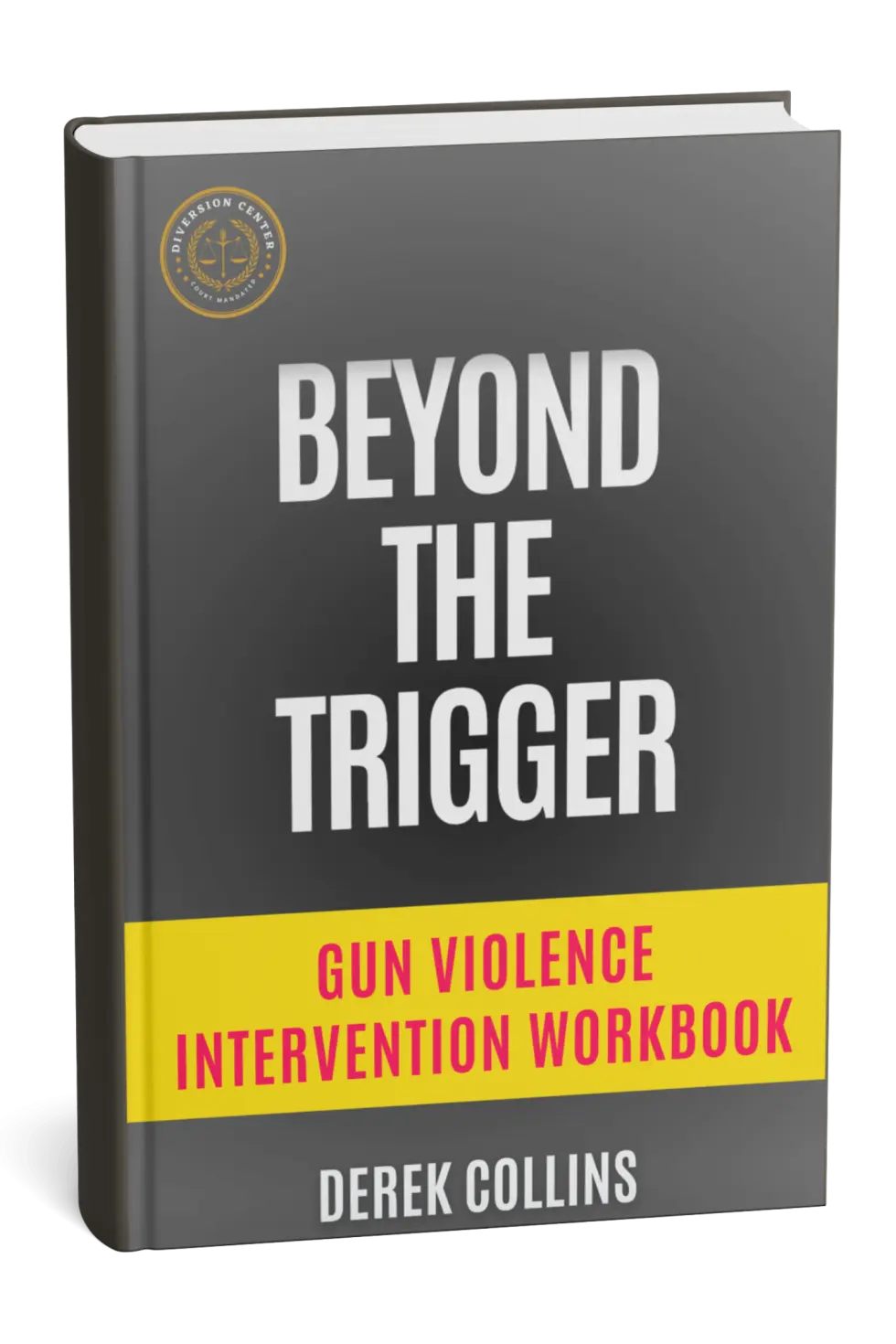
Gun Violence Intervention Curriculum
Designed specifically for schools, community-based programs and justice-involved organizations, this curriculum provides participants with the tools to prevent gun violence.
Key Topics:
- Gun Safety Basics, Conflict Resolution, Domestic Violence, Anger Management, Avoiding Triggers, Assertiveness, Retaliation, Street Cred, Dealing With Bullies, Warning Signs, Social Emotional Learning
- Family Drama, Cognitive Distortions, Trauma, PTSD, Mood Management, Self-Esteem, Denial, Stages of Change, Self-Care, Belief and Self Image, Living by Principles, Forgiveness
- Validation, Social Media and Digital Safety, Consequences of Violence, Self-Awareness, Credit, Personal Budget, Professional Development, Accountability, Gratitude and More.
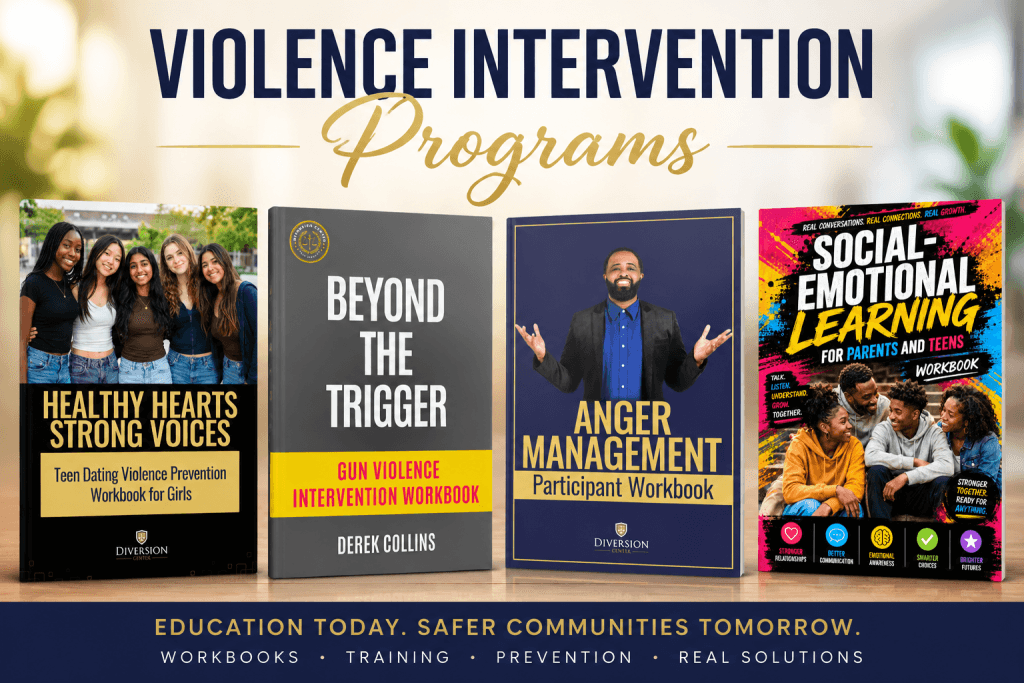
Violence Intervention Programs
For community organizations, schools, mentoring, and afterschool programs. This curriculum is a comprehensive guide on helping parents and teens improve Social-Emotional Learning at home.
Key Benefits:
- Improves family engagement and facilitates meaningful conversations with parents and their children.
- Improves decision making, self-awareness, social awareness, self-regulation, relationship skills.
- Helps develop principles, values, and codes of conduct.
- Influences proactive over reactive behavior.
Email Dcollins@thediversioncenter.com to learn more
Financial Stability Resources
We believe financial health is tied to mental health. When your money is right, the last thing that you want to do is “fumble the bag” by getting involved with violence or criminal behavior. “There’s no need to scam when your money is right.” -Dr. Derek Collins
These resources are perfect for family engagement, workforce development, TANF, WIOA, and reentry programs.

Key Benefits:
- Clear pathways to skilled careers without the burden of student loan debt
- Increases options and shows a roadmap to high-paying careers
- Improves financial stability and self-esteem
Why These Programs Are Essential
Proven Results
Our workshops use evidence-based strategies that have been shown to reduce violence, improve decision making, and reduce recidivism.
Customizable Solutions
Each workshop is tailored to meet the specific needs of your agency, school, or diversion program.
Expert Instructors
Our trainers have years of experience in the field, delivering high-impact content that resonates with participants and creates lasting change.
Flexible Delivery
Workshops are available in both in-person and virtual formats, making them accessible to organizations nationwide.
School Safety and Mental Health
School safety and mental health are deeply interconnected, making them essential pillars of any effective gun violence prevention strategy. Creating a positive school climate—where students, educators, and community members feel safe, respected, and supported—can significantly reduce gun violence and foster a culture of peace. Social emotional learning (SEL) programs play a vital role in this process, equipping students with the skills to manage emotions, resolve conflicts, and build healthy relationships.
Prevention efforts should focus on identifying and addressing underlying risk factors such as mental health challenges, substance abuse, and trauma, all of which can contribute to violent behavior. By providing access to mental health services, including counseling and therapy, schools empower students to develop healthy coping mechanisms and reduce the likelihood of violence. Implementing anonymous reporting systems allows students and staff to safely report warning signs or potential threats, enabling timely intervention.
Training educators and staff to recognize and respond to warning signs is another critical component of violence prevention. When schools prioritize both safety and mental health, they lay the groundwork for preventing gun violence and nurturing a supportive, inclusive environment for all.
Secure Storage Practices and Public Safety
Promoting secure storage practices is a cornerstone of gun violence prevention and public safety. When firearms are stored unloaded, locked, and separate from ammunition, the risk of accidental shootings and unauthorized access—especially by children or individuals at risk—is greatly reduced. Community members can make a significant impact by encouraging family members and friends to adopt safe storage habits, helping to prevent gun related violence before it occurs.
Education is key: schools and community organizations can offer resources and training on secure storage, such as the Be SMART program, which empowers adults to take responsibility for gun safety. Law enforcement officers and community leaders can further support these efforts by providing in-person and specialized training sessions, ensuring that best practices are widely understood and implemented.
By working together to promote secure storage, we can create safer homes and communities, reduce the risk of violence, and protect public safety for everyone.
Partnerships and Collaborations
Effective gun violence prevention relies on strong partnerships and collaborations across sectors. Community-based practitioners, law enforcement officers, and national leaders must join forces to develop comprehensive strategies that address the unique needs of each community. Engaging community members—including young people—in the planning and implementation of violence intervention programs ensures that solutions are relevant and sustainable.
Integrating conflict resolution, job training, and social services into intervention programs helps address the underlying factors that contribute to violence. Advance peace initiatives, which focus on building positive relationships and fostering community engagement, have proven effective in reducing gun violence. Research shows that multidisciplinary teams—comprising educators, mental health professionals, and law enforcement—are especially successful in identifying and responding to potential violence.
By fostering these partnerships and collaborations, we can implement prevention and intervention strategies that are holistic, evidence-based, and tailored to the needs of our communities.
Funding and Resources
Sustained funding and robust resources are critical to the success of gun violence prevention initiatives. Community violence intervention programs, which have demonstrated effectiveness in reducing violence, require ongoing financial support from governments, foundations, and private donors. These resources enable programs to operate at scale, conduct research, and evaluate outcomes to identify best practices.
Schools and community organizations can also leverage resources like the Gun Safety Support Fund to bolster their violence prevention efforts. Investing in professional development—such as training in trauma informed care and conflict resolution—builds the capacity of community-based practitioners and educators to address gun violence effectively.
By prioritizing funding and resource allocation, we empower communities to prevent gun violence, support public health, and cultivate a culture of safety and respect.
Program Evaluation and Improvement
Continuous evaluation and improvement are essential for maximizing the impact of gun violence prevention programs. Research shows that comprehensive strategies—including case management, relationship building, and targeted intervention actions—are most effective in reducing violence. Regular program evaluation helps identify strengths, uncover areas for growth, and ensure that prevention efforts are achieving their intended outcomes.
Collaboration among community-based practitioners, law enforcement officers, and national leaders is key to developing robust evaluation protocols. Engaging young people and community members in the evaluation process provides valuable feedback and ensures that programs remain responsive to local needs. Integrating cure violence models, addressing environmental factors, and expanding access to substance abuse treatment and job training can further enhance program effectiveness.
By making program evaluation and improvement a priority, we ensure that gun violence prevention strategies remain evidence-based, adaptable, and impactful for the communities they serve.
Our workshops use evidence-based strategies that have been shown to reduce violence, improve well-being for participants and communities, improve decision making, and reduce recidivism.
These programs can also contribute to lowering the gun homicide rate in affected communities.
Flexible Delivery
Contact US Today
Ready to take the next step in transforming your organization? Contact us today to schedule a workshop or learn more about our programs. Email our team at info@thediversioncenter.com for a quote.

Marietta
Diversion Center 2480 Windy Hill Road SE Suite 401 Marietta, GA 30067 404-503-8069
Duluth
Diversion Center
2702 Duluth Hwy Suite A Duluth, GA 30096 404-503-8069
Fayetteville
Diversion Center
320 W. Lanier Ave, Ste 200 Fayetteville, GA 30214 404-503-8069
Jonesboro
Diversion Center
409 Arrowhead Blvd, Jonesboro, GA 30236 404-503-8069
Lawrenceville
Diversion Center
561 W Pike St. Suite 206 Lawrenceville, GA 30046 404-503-8069
Copyright © 2025 Diversion Center